Last month I talked about the basics of puppy house training, so I thought I’d continue that theme. Here’s some ideas on how to prepare your home so that you all come through puppyhood happy and whole.
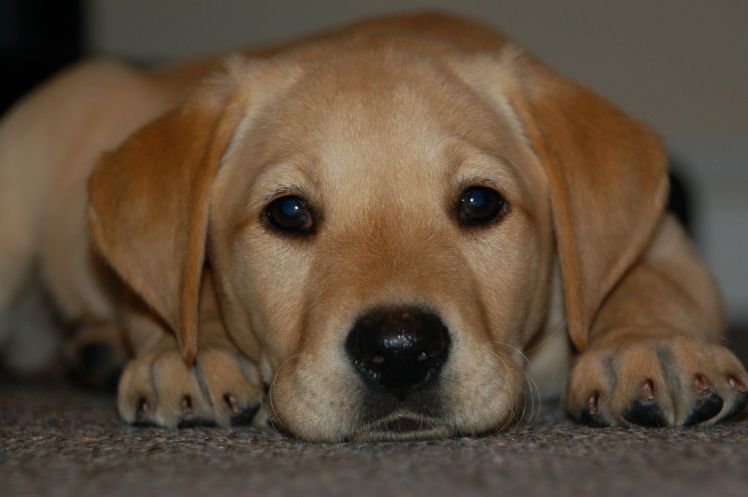
Inside a Puppy’s Head
Last time I raised a puppy, I’m sure his thoughts bounced along happily from one moment to the next, something like this:
“Look at my person over there, I love her! Wag my tail at her! Yay! A toy is lying by that big comfy thing I sleep on. I will pounce on it! I have to pee. I think I’ll go… yep… that spot will do. Ahhhh! Look how excited my person is now! I don’t know if she’s happy though…”
Remember from the last post, timing is crucial for getting puppy to the Potty Spot. (If you haven’t already, read Puppy Training Basics too, so the rest of this post makes sense. I cover the terms mentioned below in greater detail)
In this example, I needed to catch puppy somewhere between “I have to pee” and “that spot will do,” but, didn’t.
For you, to be able to spot that moment, you need to be observant, and learn your puppy’s individual signals. (These signals also covered in Puppy Training Basics).
You might not catch every time and that’s okay, (I sure don’t). Focus on those successes. If you’re carefully paying attention and learning your pup, that means you’re spending time together and bonding.
Once you have several successful rounds of getting puppy to the Potty Spot, look for little changes in his pattern of behavior. Such as:
**Scratching at the door.
**Wandering or moving in the direction of the door.
**Speeding up when you ask, “Do you have to go outside?”
These are all things you want to praise and encourage.
However this is a very tenuous time in your puppy’s development. All those little behaviors, the whining, pacing, etc., are signals your pup is learning the concept. As in, he’s in the process. He is not trained. He’s showing you he’s learned the steps.
This is a transitional phase between learning the individual steps and synthesizing them into the singular behavior, “hold it till you’re in the Potty Spot.” In this phase, it’s really easy to undo all the work you’ve put in.
Remember the boast “trained by 3 months” but still has accidents? This is the point where those owners relaxed and thought their part was over. Because in this transitional phase it’s really easy to break the behavior.
At this stage your puppy is not housetrained.
Say it with me.
“My puppy IS NOT housetrained.”
Your pup is pulling together the steps of successfully getting outside to potty. It is up to you to continue to be rigorous in your monitoring and accurate in your timing. Meaning: catch puppy before he starts to go. Reinforce your puppy with lots of praise and treats when he gets it right. Clean it up when the accident happens.
But, if you’re not able to closely watch your pup, what do you do? You create a safe space in your house for your puppy where they are contained and can’t get into puppy mischief.
The Safe Zone
Make a space where you can put your lil’ buddy for some down time. I call it a safe zone because it’s a space where if your dog does have an accident, it will not cause damage to the floor. This Zone can be a bathroom, a laundry room, a section of your kitchen that you’ve separated with an X-pen. In short you make a small space where the puppy is contained and doesn’t have a chance to destroy your home. Loose puppies are destructive puppies. While those reels might be funny, you don’t want to have to pay for those repairs.
Places that work well as a safe zone have hard surface floors that can take a lot of cleaning: kitchens, bathrooms, laundry rooms, mud rooms. Make it somewhere that you can pass by puppy and check on him frequently when you are home. Avoid making the garage the safe zone. You want puppy to be able to hear you in the house and feel part of family life even though he’s in his own zone. The garage puts a lot of separation between puppy and family, and makes it more difficult to for you to hear if pup needs you.
A safe zone gives you a place to put puppy where you do not have to worry about him getting into something he shouldn’t or chewing on the wrong thing. The only items in the safe zone are safe toys, a water bowl, and something soft to lie on. If you have enough space, putting his crate in the safe zone will help to reinforce the crate as a safe space. She should not be able to reach and chew on things like cabinets, or furniture.
If you are using an indoor potty spot, you absolutely put this in the safe zone.
The safe zone allows you to get some much needed rest or chores done and teaches pup that you aren’t going to be with her around the clock. She learns that it’s okay to be in this place, she’s safe, and you’ll be back for her later. Simple concepts that will have a big impact on her development as she grows.
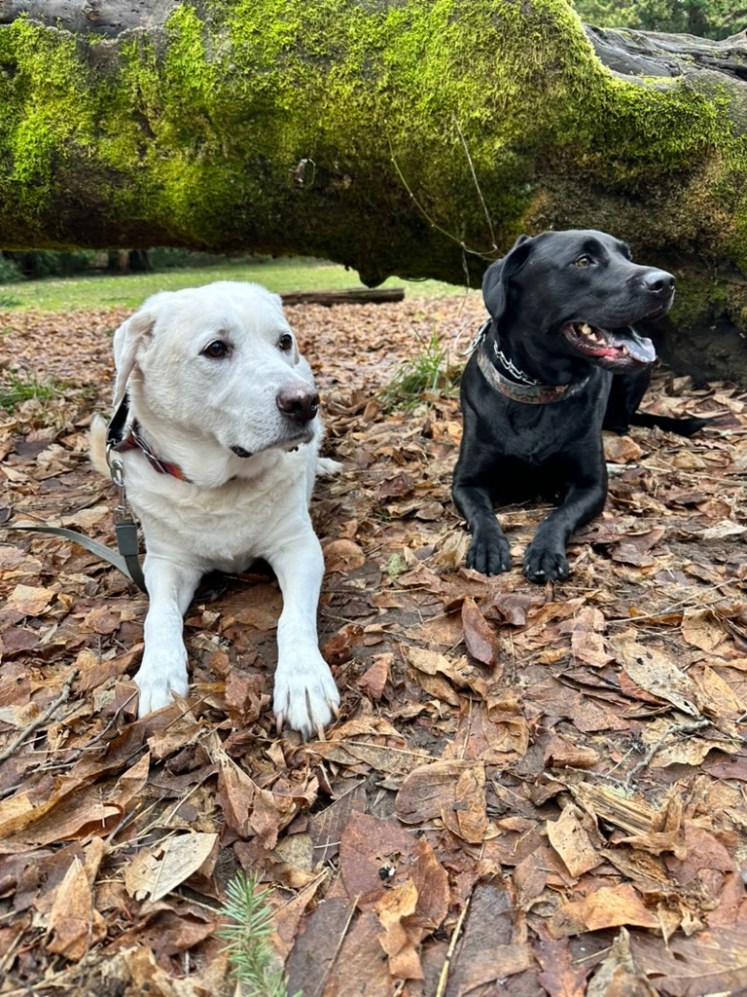
Xander and Gary hope you’ll come back next month for the third in this series. They suggest joining the newsletter too, so you never miss out.
Gary wants to remind you that his mom writes fiction too, and has a new book coming out soon. Join that newsletter for a chance at an early copy.
 Serena Dracis